Recurring templates with named owners
Define an obligation once with its cadence and its owner, and it regenerates on schedule. Ownership sits with a role as well as a person, so a departure does not silently orphan a task.

A scheduling engine for every recurring obligation - inspections, trainings, certifications, renewals. It assigns owners, sends reminders, and proves completion with a timestamped record.
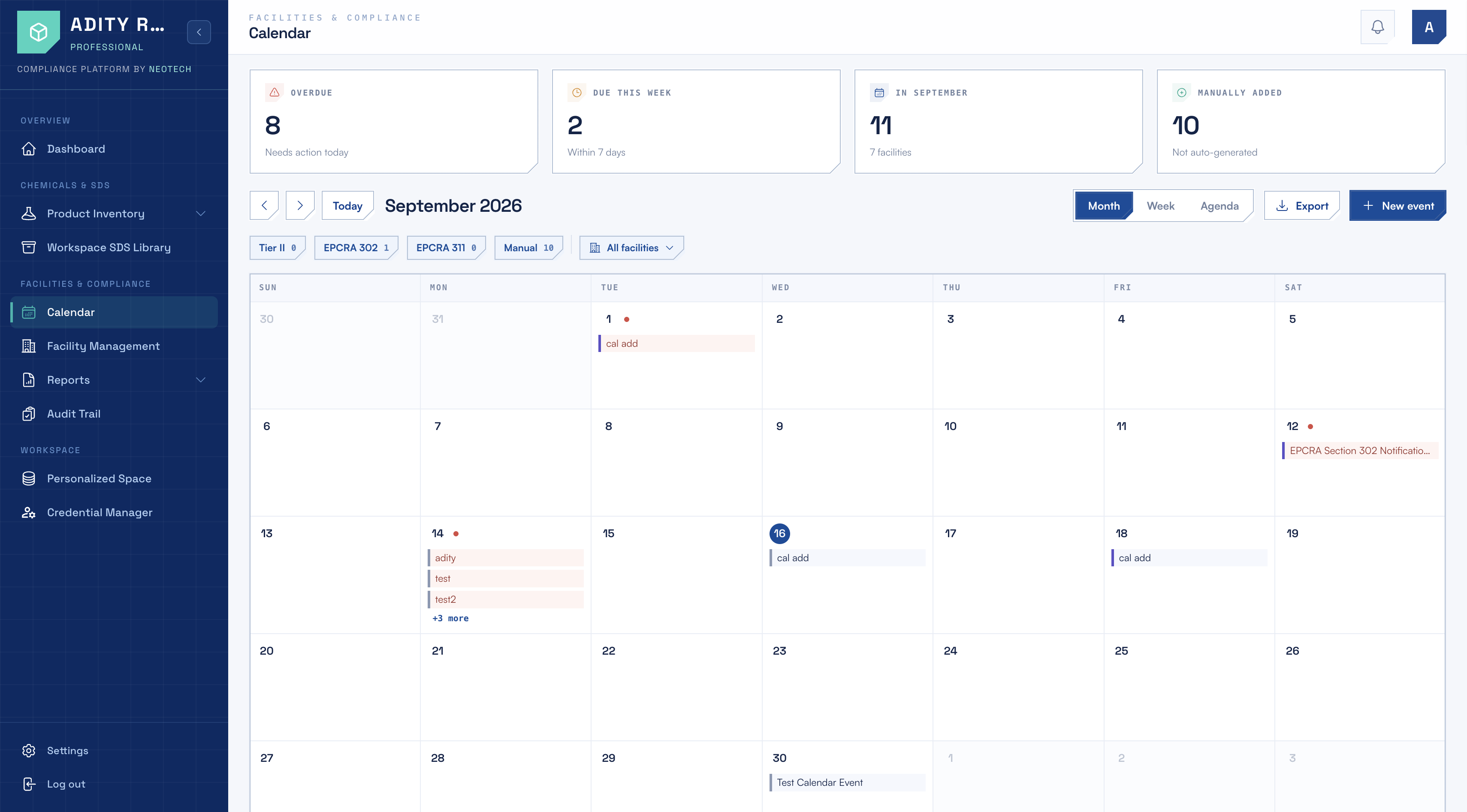
Recurring obligations fail quietly. Nobody decides to skip an annual inspection - an owner leaves, a reminder lands in a filtered inbox, and the lapse is discovered during an audit rather than before one. A calendar in someone's head, or in a spreadsheet only they open, is a single point of failure.
Define an obligation once with its cadence and its owner, and it regenerates on schedule. Ownership sits with a role as well as a person, so a departure does not silently orphan a task.
Reminders go out ahead of the due date and escalate when a task passes it, so an overdue obligation surfaces to someone with authority instead of sitting unseen in a queue.
Completion is recorded with who closed it, when, and any attached evidence. That record is the difference between telling an auditor the inspection happened and showing them.
Obligations across all facilities sit in a single calendar, so a corporate EHS lead can see what is due, what is late, and where, without chasing each site for a status update.
Book a 30-minute walkthrough and we'll run threshold screening on one of your own facilities during the call.